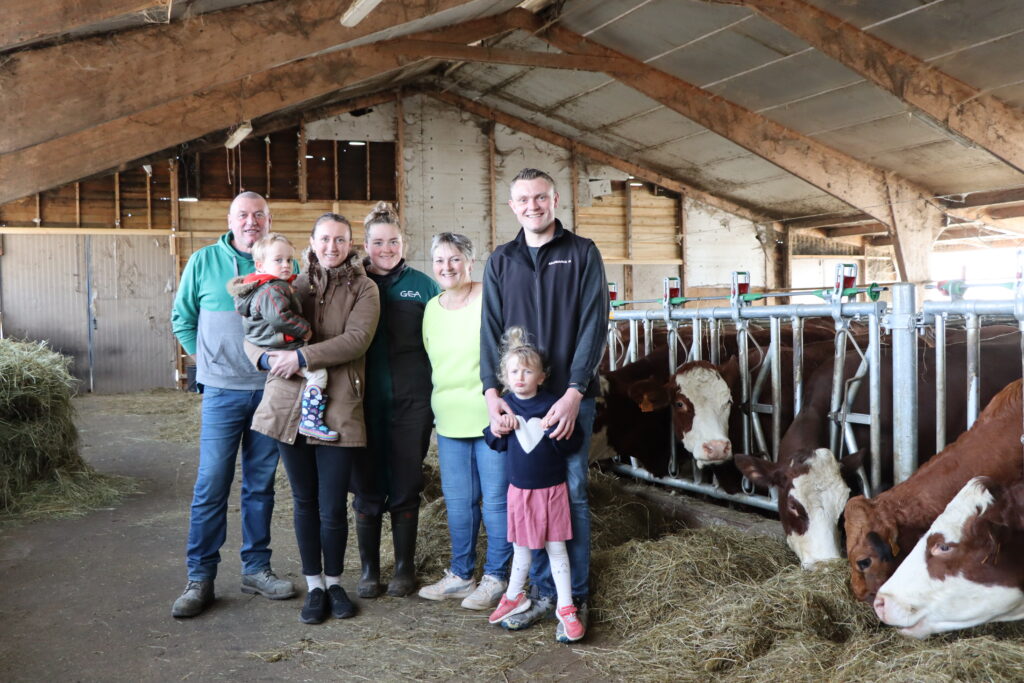
AURIVA Launches the OPU-FIV on the Farm
25 June 2026Producing milk for a supply chain that is unique in France: Gruyère de France
Interview with Julien GOURY, partner at GAEC DU NANT DES FRASSES and vice president of the Fruitière des Savoie cooperative
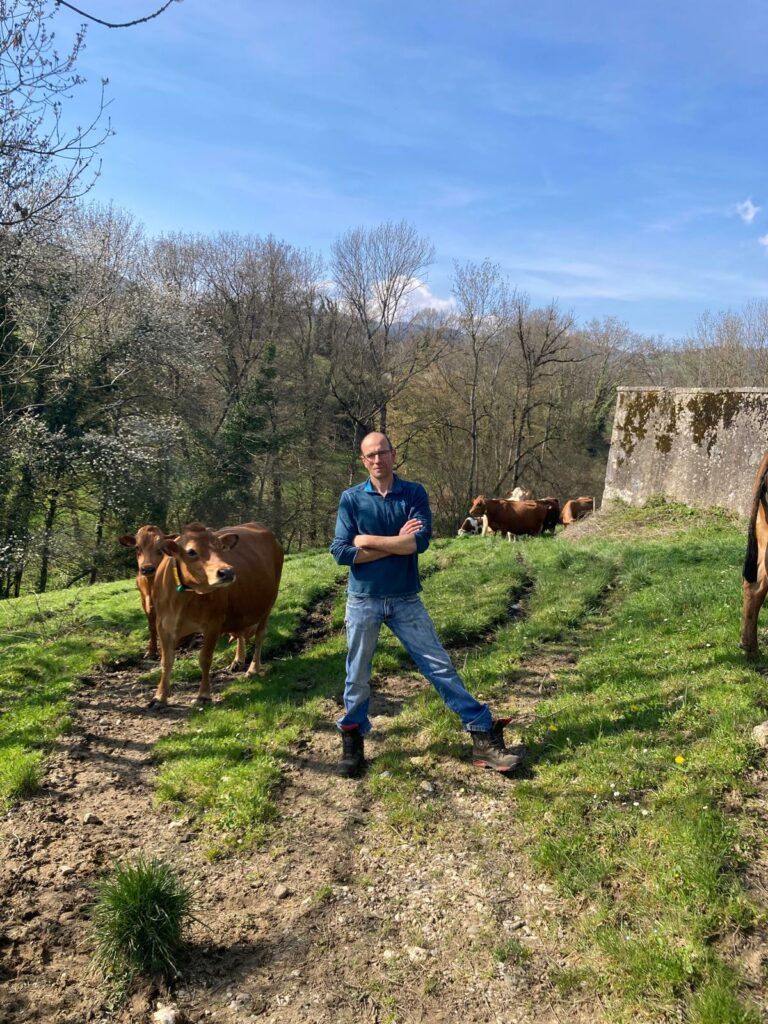
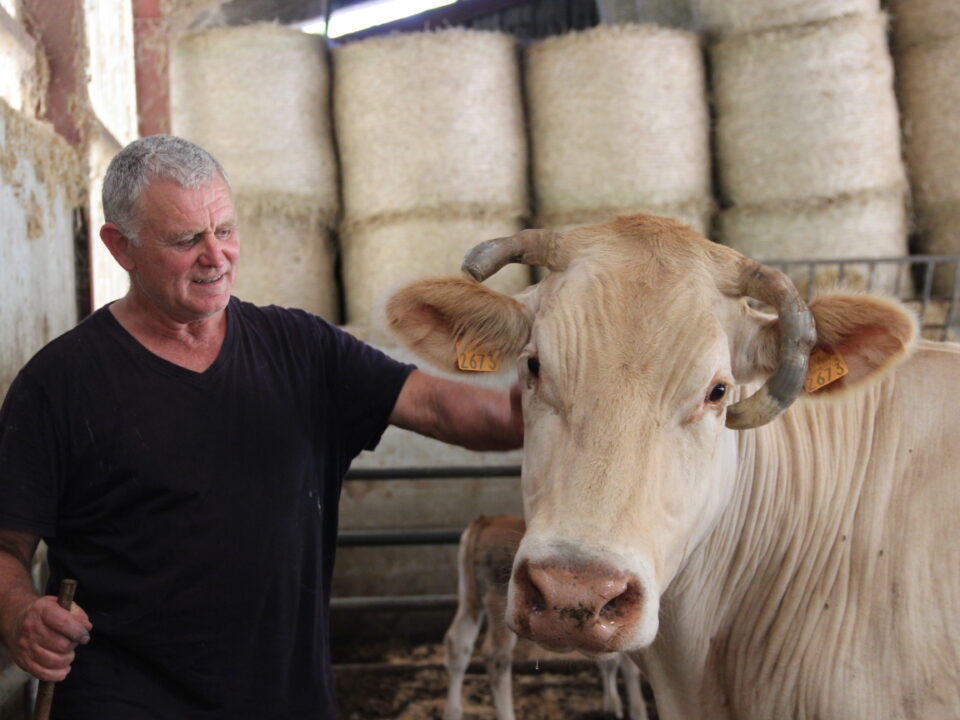
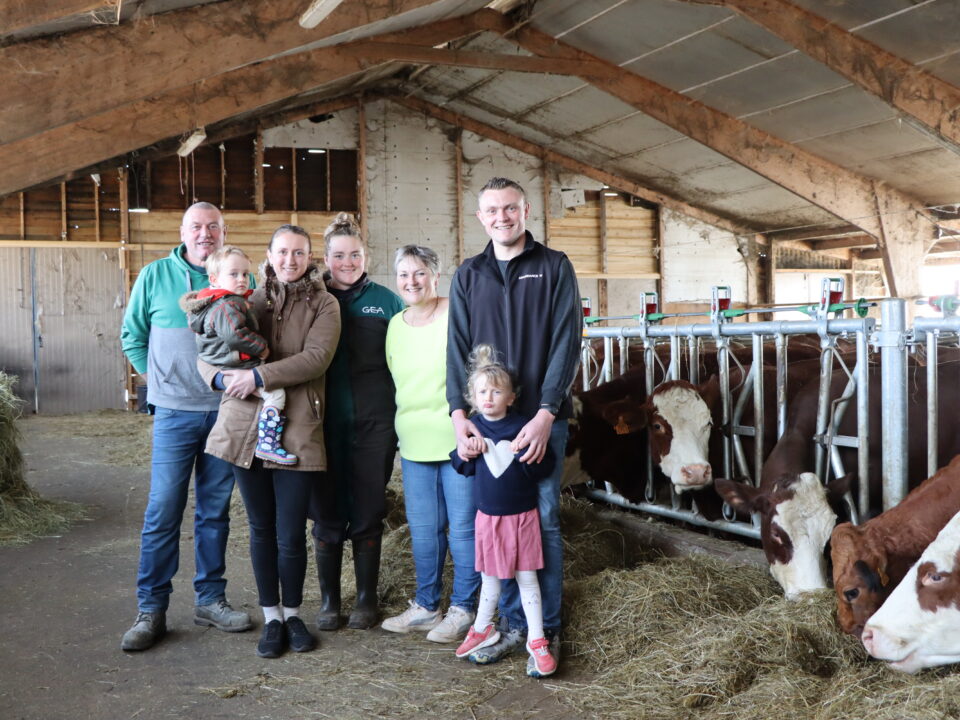
Julien GOURY, who has been working alongside Philippe for 25 years at GAEC LE NANT DES FRASSES in the town of LA BIOLLE in Savoie, has also served as vice president of the Fruitière des Savoie cooperative for the past 12 years. In this article, he talks to us about his daily life, genetics, and, above all, the Fruitière des Savoie.
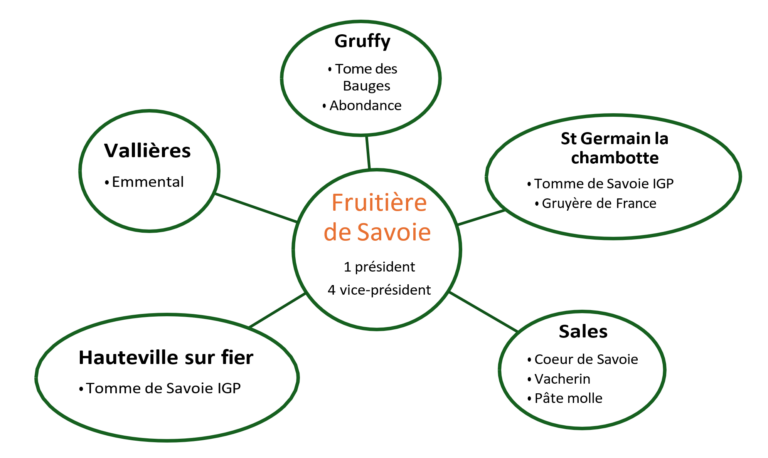
Fruitière des Savoie is a cooperative comprising 160 farmers across 120 dairy farms. It is chaired by Fabrice JACQUET, a partner at GAEC LE CHAUDRON, and three other vice presidents.
It was formed through the merger of several small cooperatives, which explains why it is now divided into five locations:
- The GRUFFY site : This is the cooperative’s headquarters.
- Production of Tome des Bauges (195 metric tons per year from 6 producers) and Abondance (410 metric tons per year from 10 producers).
- The ST GERMAIN LA CHAMBOTTE site :
- Production of Tomme de Savoie PGI (490 metric tons per year) and Gruyère de France (190 metric tons per year, produced by 13 producers).
- The SALES website
- This is the diversification facility: production of “Cœur de Savoie” (100 metric tons per year), Vacherin, and soft cheese; an organic-certified facility.
- The town of HAUTEVILLE SUR FIER
- Production of Tomme de Savoie PGI
- The Vallieres Site
- Emmental Production
Julien’s role in the Fruitière’s organization is both to assist the president with various matters and to stand in for him at meetings when necessary.
A meeting with the processor CHABERT is held once a year to set the price of milk. Of the processor’s total production—100,000,000 liters of milk—52,000,000 liters are produced by the Fruitière de Savoie.
As for how it works, the rules are simple: farmers who join La Fruitière must remain members for at least 10 years; after that, their contracts are for 5 years and are automatically renewed. Any farmer can therefore leave the cooperative when their contract expires.
A Look Back at the Farm
In 2001, Julien moved to his uncle’s farm, which had about 20 Tarine cows and a few Abondance cows, producing 70,000 liters per year. There, he formed a GAEC with Philippe, his neighbor, and together they built up a herd of 40 dairy cows kept in tie-stall barns until 2004, producing 200,000 liters of milk per year.
In 2004, they renovated and expanded an existing building to create a free-stall barn capable of housing 60 animals. Today, the herd consists of 50% Tarine and 50% Abondance/Montbéliarde cattle. The UAA (utilized agricultural area) covers 100 ha, including 15 ha of grain crops.
Dairy Production and Quality Premiums
Milk production totals 400,000 liters per year, delivered to the Fruitière de Savoie at its St. Germain-la-Chambotte facility.
Today, the price of milk generally ranges from 620 to 670 euros per metric ton. This price is made up of a base price plus various supplements linked, in particular, to milk quality and other variable criteria.
Bonuses and penalties are applied to each monthly milk payment based on several quality criteria: fat and protein content (TP, TB), as well as various health and microbiological indicators for the milk (total flora, somatic cells, butyric acid bacteria, and undesirable microorganisms).
“Here, the fat content is around 40 and the protein content is around 34.5. The GAEC meets all the requirements of the Gruyère de France PGI (Protected Geographical Indication)—there are only 11 producers in our dairy cooperative today—so complying with the specifications isn’t a burden.”
Specifications that require
- to have cows of the Abondance, Tarine, Montbéliarde, Vosgienne, and Simmental breeds,
- to have a diet consisting solely of grass and hay, at least 80% of which must come from the PGI’s geographical area.
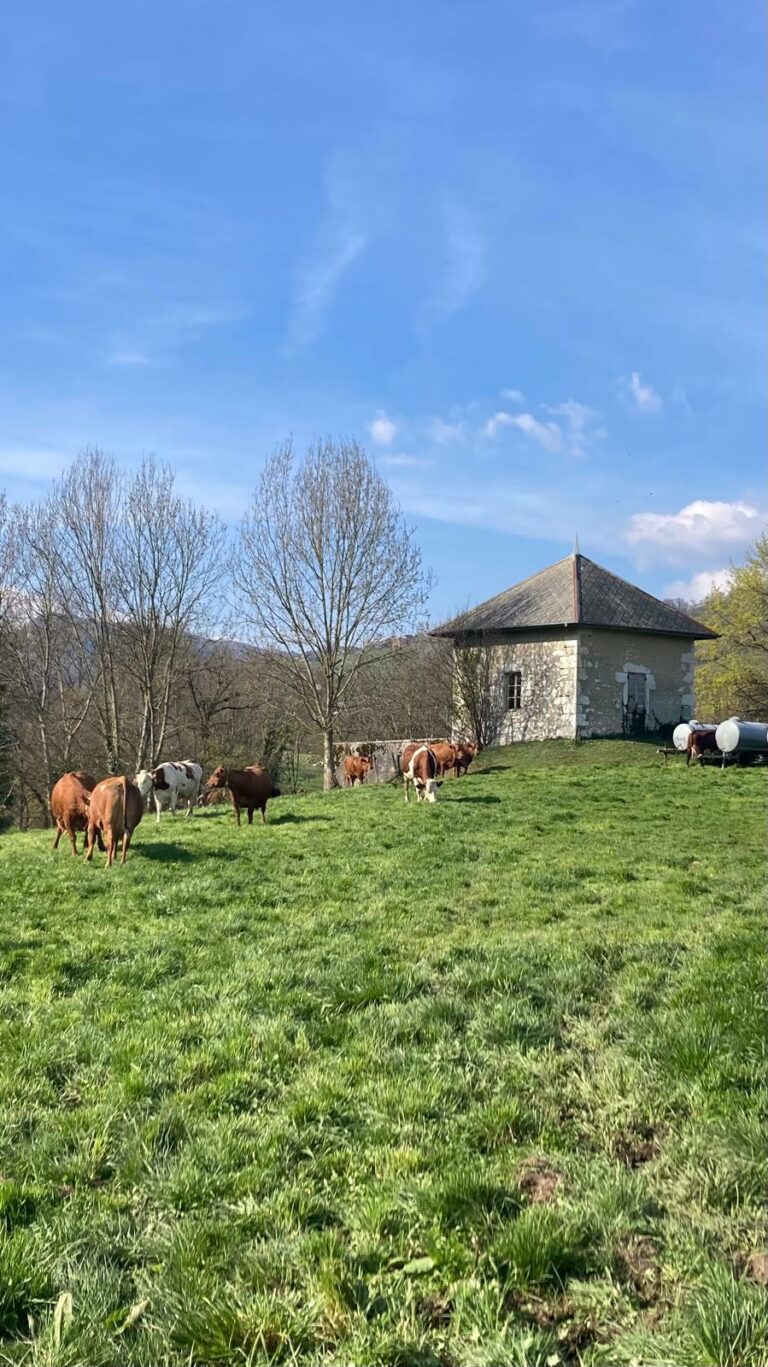
- To graze the cows for at least 150 days a year, limiting grain feed to 1,800 kg per cow per year.
” On our farm, the cows graze in the pastures right next to the farm as soon as the weather permits. The PGI requires us to milk twice a day, morning and evening, and no more than 13 to 15 times a week. This requirement makes it difficult to switch to robotic milking, for example. The milk is collected daily and processed at the St. Germain facility. The industry also asks us to pay attention to our fat-to-protein ratio (between 1.12 and 1.20). Here, it’s 1.15. “
Genetics and Reproduction
In terms of genetics and breeding, the GAEC develops its breeding plan once a year using EDS and AURIVA. The breeding objectives are: ISU, Milk, and Functional Traits. “ We do pay attention to the rates, though, because that’s what adds value to our milk payments. Of course, these criteria are based on the farm itself, such as as it is today. If we were to change our farming area, we would have to reevaluate these criteria . “
All the bulls in the AURIVA line are used on the farm. One-quarter of the females undergo sex-sorted insemination for herd replacement. There is an increasing trend toward crossbreeding with YPERIOS INRA 95 and YPERIOS Excellence Charolais, as well as with BBB, to maximize the value of calves that breeders do not wish to raise. All females across the three breeds have been genotyped for the past 5–6 years, starting at birth. This allows Julien and Philippe to select and retain the best animals for herd renewal, particularly those with the highest milk production.
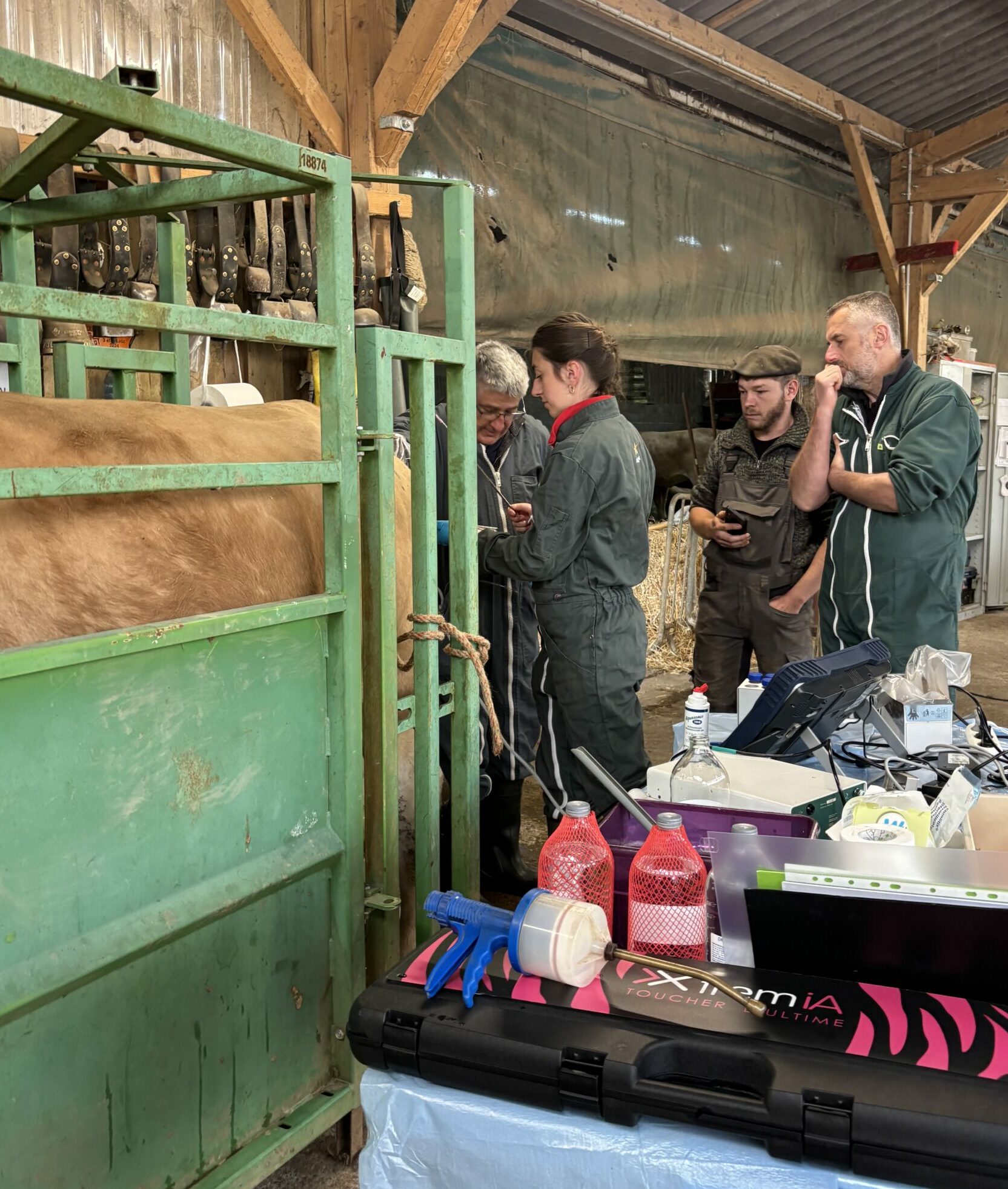
The AURIVA team performs embryo transfer (ET) on one female Tarine per year. “ Last year, for example, we collected a female Tarine to save the line that had been affected by neosporosis. We also implanted a Tarine embryo from the AURIVA bank: a sexed embryo from Sucette. “
What about in 10 years?
” Our goal for the coming years is to continue making progress with the Tarine breed and move forward. As for Philippe, my business partner, he still has 5–6 years left before retirement, so we’ll see what the future holds for us between now and then! “
Articles Similaires