Genoa, set and match!
26 March 2026From grass to cheese: a coherent system serving the Abondance PDO sector
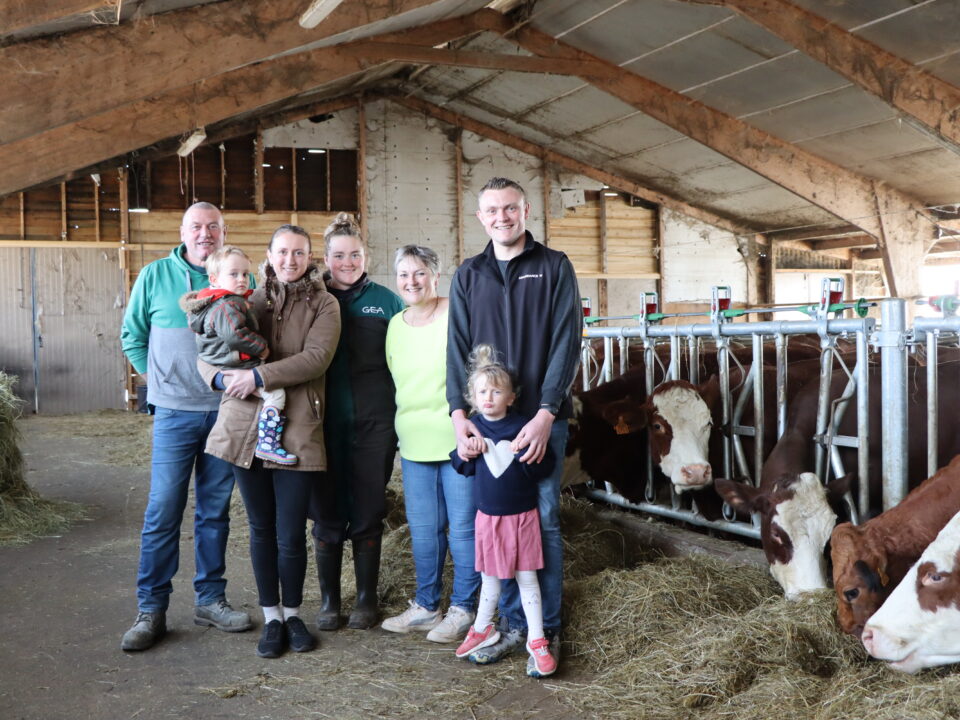
EARL Ferme Fleury - Sophie Petit
A modernized family heritage
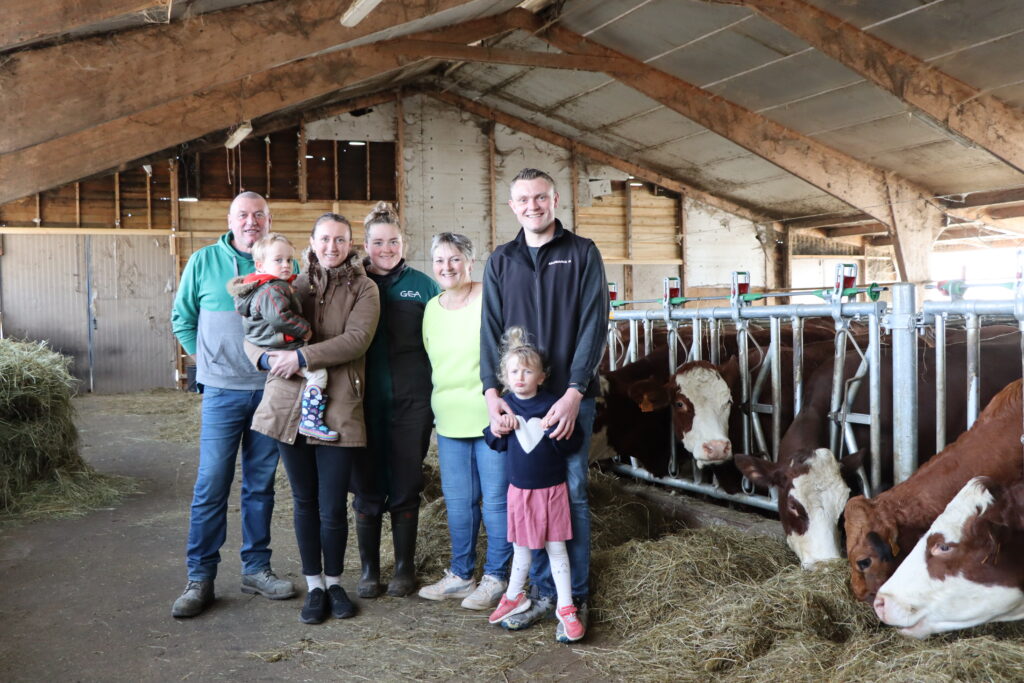
Established in 2020, Sophie Petit took over the family farm founded by her grandfather, then developed by her father Gérard in the 1980s. Back then, the herd consisted of around twenty 100% Montbéliarde cows.
Her professional reconversion marked a turning point: she modernized the buildings to improve her working conditions (conveyor belts, milking rail, feeding robot…) while preserving the original spirit of the farm.
Today, the stanchion-stable farm has :
- 36 dairy cows
- 12 heifers bred each year
- 57 hectares of UAA, exclusively grassland
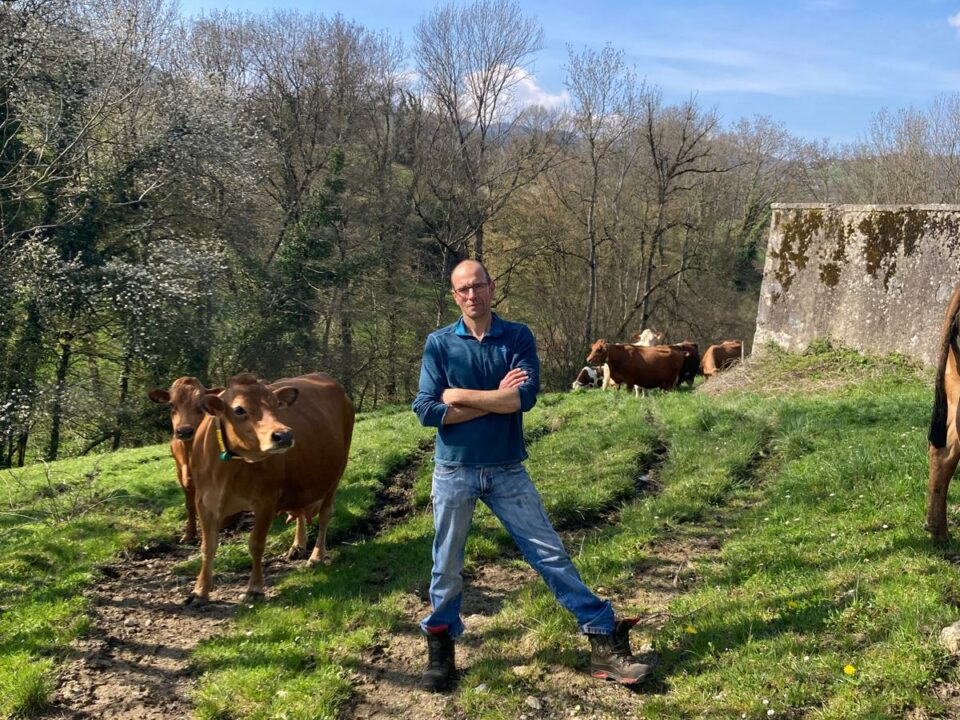
The system is based on grazing, with some forty hectares accessible around the farm, enabling the animals to be turned out from mid-March to mid-November. The winter ration, which complies with the industry’s specifications, is made up of hay, regain and concentrates (corn, barley, meal, minerals). The herd is gradually evolving towards the Abondance breed, which now accounts for 37% of the workforce.
Production designed for cheese
With an annual production of 220,000 liters, i.e. around 6,700 liters per cow, the herd’s levels are well suited to cheese processing (34 and TP and 39 in TB). All the milk is delivered to Fruitière des Savoie, at the Gruffy site, where it is mainly processed into Tome des Bauges and Abondance cheeses. The cheeses are then matured by wholesaler Chabert and marketed through various channels.
The industry imposes precise specifications that guarantee the typicality of PDO cheeses:
- minimum 45% Abondance breed animals
- at least 150 days of grazing
- limited to 1,800 kg of concentrates per cow per year
The price of milk, between €700 and €750/tonne, reflects the added value of the cheese. It includes a quality-based remuneration, with related bonuses and penalties:
- protein (TP) and butter (TB) levels
- sanitary criteria (cells, total flora, butyric flora, undesirable germs)
Some cooperatives go further, integrating the TB/TP ratio as an indicator of balance, essential for good cheese processing.
"Today, I'm in line with expected values. I want to produce quality milk without pushing the cows. Even outside the industry, I'd make the same choices. The Abondance breed is hardy, with good legs, and goes through lactations well: this suits me perfectly. "
Sophie PETIT
Genetics for milk quality
Sophie’s selection objectives are therefore in line with the expectations and objectives of the cheese industry:
- rates (TP, TB)
- controlled milk production
- udder health
- legs and temperament
She relies on breed technicians and mating planning tools to guide her choices. Each year, a schedule is drawn up with Philippe Boulens at AURIVA or an OSRAR technician.
The herd has been 100% genotyped from birth for the past eight years. A strategic lever that enables :
- anticipate the potential of females
- optimize couplings
- enhance the value of animals for sale
” What I want is to produce milk, but above all quality milk. “
Although no embryo transplants have yet been carried out, Sophie is thinking about it, in particular to enhance the value of certain heifers. ” The idea would be to work with AURIVA to integrate a heifer into the bank. I really like the collective and cooperative aspect. “
Opening up to on-farm processing
By 2026, a new project will strengthen the link between production and marketing: the part-time installation of her husband Alexandre, with the creation of a processing workshop. The aim is to process around 10,000 liters of milk a year into farmhouse products (lactic cheeses, yoghurts), sold through short distribution channels (markets, producers’ stores, etc.).
This project is fully in line with the industry’s strategy of maximizing the value of quality milk, while diversifying outlets.
” Work is due to start soon. In 10 years’ time, we’d like to see a farm that’s still viable, with a small, efficient and profitable herd. . “
Articles Similaires